Bank Exchange Rate vs Market Rate: Why They're Different
Learn why the rate your bank offers is always worse than the market rate, how the margin works, and which venues give you the best deal on currency exchange.
- exchange rates
- bank fees
- currency exchange
- travel money
- forex
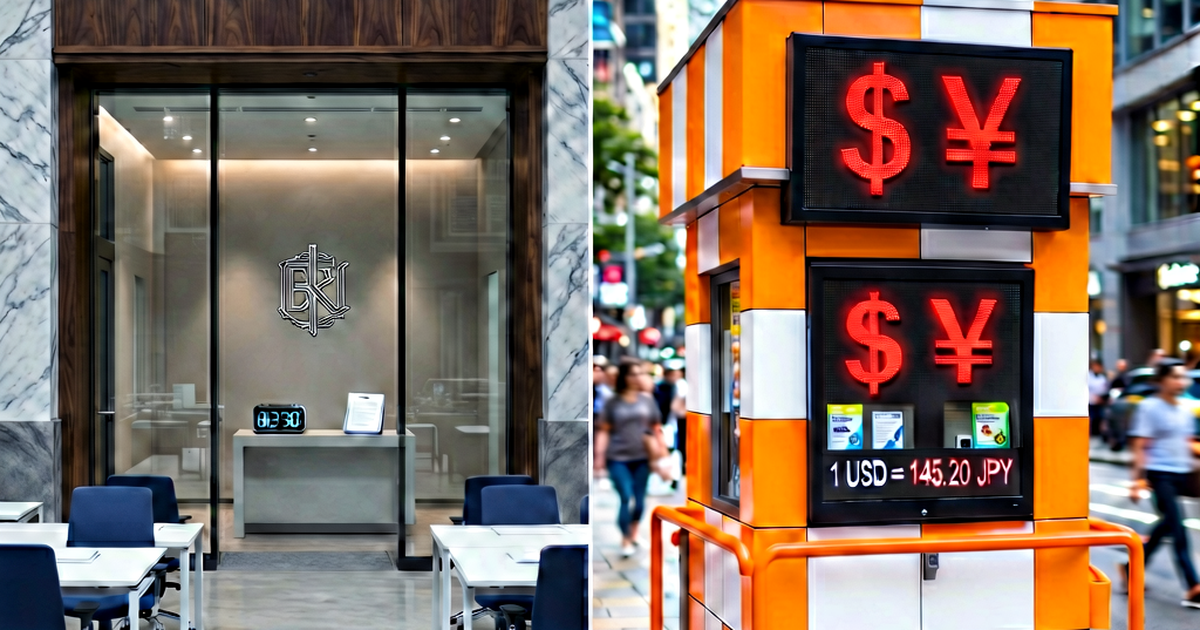
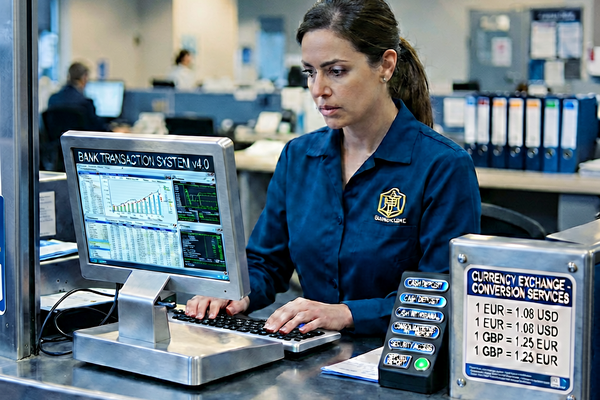
You open a currency converter, see that 1 USD buys 0.92 EUR, then walk into your bank and find out they will only give you 0.86. The difference is not a glitch or a mistake. It is the business model.
Understanding why the bank rate and the market rate differ — and by how much, depending on where you exchange — can save you meaningful money, especially when you are moving large sums.
The Interbank Rate: What Banks Pay Each Other
The rate you see on financial data platforms and currency converter tools is usually the mid-market rate, also called the interbank rate or spot rate. This is the rate at which large financial institutions — banks, hedge funds, central banks — trade currencies with each other in the global wholesale market.
The interbank market is enormous. According to the Bank for International Settlements (BIS), foreign exchange markets see average daily trading volumes exceeding $7 trillion. At this scale, the spreads between buy and sell prices are razor thin — sometimes a fraction of a basis point on major currency pairs like EUR/USD.
This is the rate the ECB publishes as its daily euro foreign exchange reference rates. It is also the rate the Federal Reserve reports in its H.10 statistical release. It is a real rate, but it is a wholesale rate — not available to individual consumers or small businesses directly.
The Retail Rate: What You Actually Get
When a bank or foreign exchange provider offers currency to a retail customer, they start from the interbank rate and add their margin. This margin compensates them for:
- Risk: They buy currency in advance without knowing exactly when it will be sold.
- Operational costs: Handling physical cash, staff, compliance.
- Profit: Foreign exchange is a revenue line for banks and exchange services.
The margin is usually expressed implicitly in a worse exchange rate rather than as an explicit line-item fee — though fees may also exist on top of the rate markup. This combination is sometimes called the “all-in cost” of an exchange.
How Much Worse? A Venue-by-Venue Comparison
Not all retail venues are equally expensive. Here is how they typically stack up, from worst to best for the consumer:
Airport Kiosks (Worst)
Airport currency exchange booths operate in a captive environment. Travelers often have no good alternative right before a flight or upon landing, so competition is limited. Markups at airport exchanges frequently run 5% to 12% above the mid-market rate — sometimes more. On a $1,000 exchange, that is $50 to $120 in implicit cost.
Hotel Desks and Tourist-Area Exchanges
Hotels that offer currency exchange and street-facing exchange booths in tourist areas are similar to airports in terms of convenience premium. Markups vary widely, but they are consistently worse than the interbank rate. Their rates are worth checking quickly against a currency app before you hand over cash.
Bank Branches
A traditional bank branch typically offers rates 2% to 5% above the mid-market rate for retail customers, sometimes with an additional fixed transaction fee. The rate may improve slightly if you are an existing customer with a premium account. Still meaningfully worse than the market rate, but better than airports.
Credit Cards with Foreign Transaction Fees
Many standard credit cards charge a foreign transaction fee of 1% to 3% on purchases abroad, on top of using a rate close to (but not exactly) the network exchange rate. The Visa and Mastercard network rates are relatively competitive — usually within 1% of the interbank rate — but the foreign transaction fee erases much of that advantage.
Credit Cards with No Foreign Transaction Fees
Cards that waive the foreign transaction fee give you Visa or Mastercard network rates with no markup on top. For everyday travel spending, this is typically one of the better options available to most consumers — though you still cannot access the raw interbank rate.
Online Transfer Services and Fintech Providers
Services like Wise (formerly TransferWise) operate by matching currency flows rather than running a traditional exchange desk. They aim to offer rates very close to the mid-market rate, with transparent, explicit fees. For international transfers in particular, this approach tends to be significantly cheaper than a bank wire. The fees are visible before you confirm, which makes comparison straightforward.
Specialist FX Brokers (Best for Large Amounts)
For large transactions — typically $10,000 or more — specialist foreign exchange brokers can negotiate rates much closer to the interbank level. Companies in this space serve businesses and individuals making significant international transfers. At high volumes, even a 0.5% improvement over a bank rate is material.
Why Banks Do Not Just Offer the Market Rate
The short answer: they do not have to. Currency exchange is a profitable service, and most consumers do not shop around aggressively. Banks also bear real costs in offering the service — managing foreign currency inventory, regulatory compliance, and hedging their own exposure.
This is not unique to banking. Any intermediary in a two-sided market takes a spread. The interbank market itself has a bid-ask spread; it is simply much narrower than retail spreads because the transaction sizes are enormous and the participants are sophisticated.
Practical Takeaway
Before exchanging any significant amount of currency:
- Check the mid-market rate using a currency converter so you know the baseline.
- Get quotes from two or three sources — your bank, an online service, and (if relevant) a specialist broker.
- Calculate the all-in cost: the rate difference from mid-market plus any explicit fees.
- For everyday travel spending, a no-foreign-transaction-fee credit card plus ATM withdrawals at destination often beats exchanging cash before departure.
The gap between the market rate and what you actually receive is not hidden — it is just not always presented clearly. Knowing what to look for puts you in a much better position to minimize it.
Exchange rates shown are for informational purposes only and may differ from rates offered by banks, money transfer services, or foreign exchange providers. Always verify current rates before completing any financial transaction.
Related reading
-
Best Time to Exchange Currency: What Actually Matters
Honest advice on when to exchange currency — what you can control, what you cannot, and how to avoid the biggest costs regardless of timing.
-
How Currency Exchange Rates Work: A Plain-English Guide
Understand what exchange rates are, what drives them, how central banks influence them, and how bid/ask spreads affect the rate you actually get.
-
Travel Money Tips: How to Keep More of Your Cash When Traveling Abroad
Eight practical tips for managing money abroad — from avoiding airport exchanges and dynamic currency conversion to choosing the right card and ATM strategy.