USD to EUR: Understanding the World's Most-Traded Currency Pair
Learn what drives the USD/EUR exchange rate, the history of the euro, how to read the pair, and what to know about converting dollars to euros today.
- USD EUR
- euro dollar
- currency pair
- forex
- currency converter
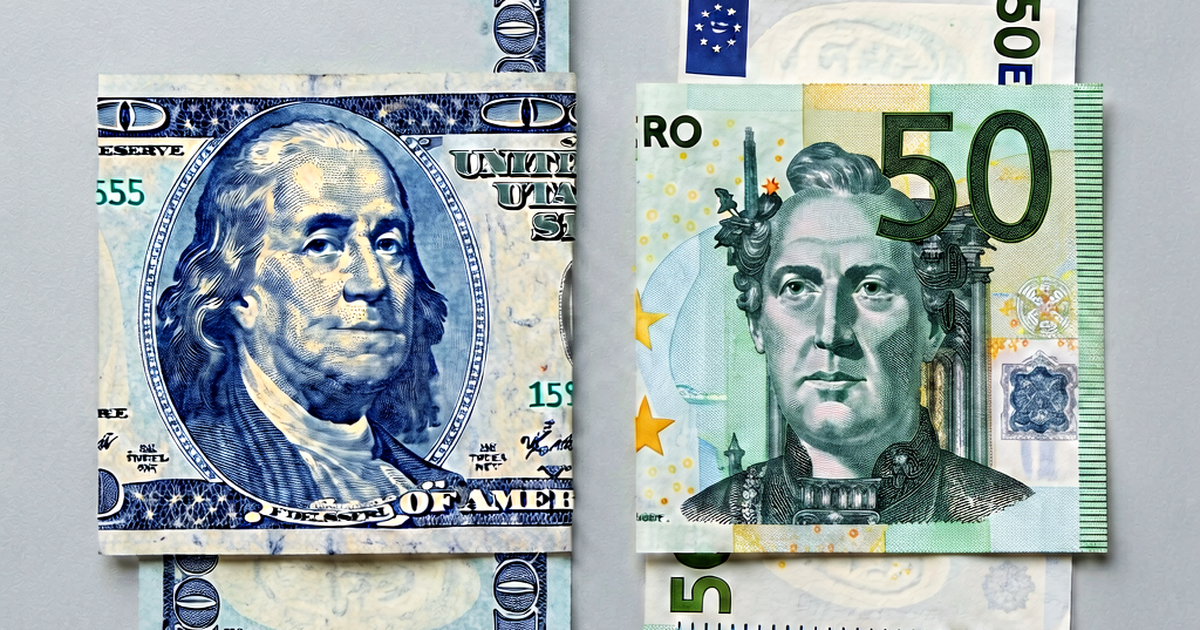
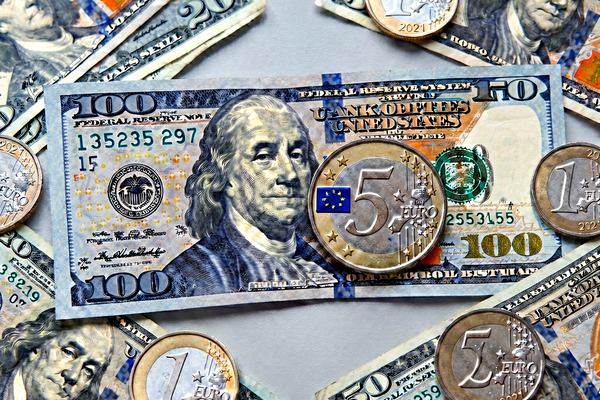
When you look up the dollar-to-euro rate, you are checking the price of the most actively traded currency pair in the world. The EUR/USD pair accounts for a larger share of global foreign exchange turnover than any other pair. According to the Bank for International Settlements (BIS) Triennial Central Bank Survey, EUR/USD consistently represents around 22–24% of all daily FX trading volume globally — in a market that trades more than $7 trillion per day. Understanding this pair means understanding how two of the world’s largest economies interact through the price of money.
How the Pair Is Quoted
EUR/USD is always quoted with the euro as the base currency and the US dollar as the price currency. A quote of EUR/USD = 1.09 means one euro buys 1.09 US dollars.
If you are converting dollars to euros (USD to EUR), you are effectively asking the inverse: how many euros does one dollar buy? If EUR/USD = 1.09, then 1 USD = 1 ÷ 1.09 = approximately 0.917 EUR.
Currency converters handle this arithmetic automatically, but it helps to understand the underlying structure when you see different sources quoting “EUR/USD” versus “USD/EUR.”
A Brief History of the Euro
The euro is relatively young as global reserve currencies go. It launched on January 1, 1999 as an accounting currency for the 11 founding eurozone member states. Euro banknotes and coins entered circulation on January 1, 2002.
At its launch, the euro was actually weaker than the US dollar. EUR/USD dropped below 0.83 in October 2000 — meaning one euro bought less than 83 US cents. The euro then strengthened significantly through the early 2000s, briefly touching 1.60 in 2008 before the global financial crisis. It has fluctuated over a wide range since, responding to each era’s particular combination of monetary policy, economic divergence, and geopolitical pressure.
The eurozone today includes 20 member states as of 2023. The European Central Bank (ECB), based in Frankfurt, manages monetary policy for the entire eurozone — a structural complexity that has no equivalent on the US side, where the Federal Reserve manages policy for a single economy.
What Drives the USD/EUR Rate?
Because both the dollar and the euro are freely floating currencies backed by large, sophisticated economies, their exchange rate is driven by the full set of factors that move any major pair. Several stand out as particularly important for EUR/USD specifically.
Federal Reserve vs. ECB Policy Divergence
The single most closely watched driver of EUR/USD is the difference in monetary policy between the Federal Reserve and the ECB. When the Fed raises interest rates while the ECB holds or cuts, dollar-denominated assets become more attractive to global investors, increasing demand for dollars and pushing EUR/USD lower (meaning the euro weakens relative to the dollar). When the ECB is more hawkish than the Fed, the dynamic reverses.
This “policy divergence” theme has driven some of the largest multi-year moves in EUR/USD. In 2022, when the Fed raised rates aggressively to address US inflation while the ECB moved more slowly, EUR/USD fell close to parity (1:1) for the first time in roughly two decades.
US and Eurozone Economic Data
Each region’s economic health matters. Strong US employment data, GDP growth, or consumer spending figures tend to support the dollar. Similarly, strong eurozone data or better-than-expected inflation reports from the ECB’s perspective tend to support the euro. Key scheduled releases — non-farm payrolls in the US, euro area CPI, PMI surveys — routinely move the pair on their release dates.
Inflation Differentials
Both the Federal Reserve and the ECB have price stability mandates centered on 2% inflation. When one economy’s inflation diverges significantly from the other’s, it affects both relative purchasing power and expectations for monetary policy response, which in turn moves the exchange rate.
Risk Sentiment and Safe-Haven Flows
During periods of global financial stress, the US dollar typically strengthens because of its status as the world’s primary reserve currency and the depth of US Treasury markets. This means that even when US economic fundamentals are not strong, the dollar can appreciate in a crisis. The euro, while widely held, does not carry the same safe-haven status to the same degree.
Using a Currency Converter for USD to EUR
When you use a currency converter to check the USD to EUR rate, you are seeing the current mid-market rate — the midpoint between the buy and sell prices in the interbank market. This is the closest thing to an objective, real-time rate.
The rate you can actually transact at — through your bank, a transfer service, or a currency desk — will be slightly worse than the mid-market rate, by an amount that depends on the provider. Knowing the mid-market rate before you exchange gives you a benchmark to evaluate any quote you receive.
Sending Money: EUR/USD and Remittance Costs
USD to EUR is one of the most competitive corridors for international money transfers, precisely because of the high volume and competition among providers. Services that specialize in international transfers often offer rates very close to mid-market for this pair, with transparent fees.
For comparison, less-traded currency pairs — for example, sending money from a US dollar account to a less common currency — typically carry higher spreads and fees, because the markets are thinner and providers take on more risk.
If you are sending a significant amount from USD to EUR (or vice versa), comparing rates across two or three providers before confirming is a worthwhile few minutes of work.
Exchange rates shown are for informational purposes only and may differ from rates offered by banks, money transfer services, or foreign exchange providers. Always verify current rates before completing any financial transaction.

Related reading
-
Bank Exchange Rate vs Market Rate: Why They're Different
Learn why the rate your bank offers is always worse than the market rate, how the margin works, and which venues give you the best deal on currency exchange.
-
How Currency Exchange Rates Work: A Plain-English Guide
Understand what exchange rates are, what drives them, how central banks influence them, and how bid/ask spreads affect the rate you actually get.